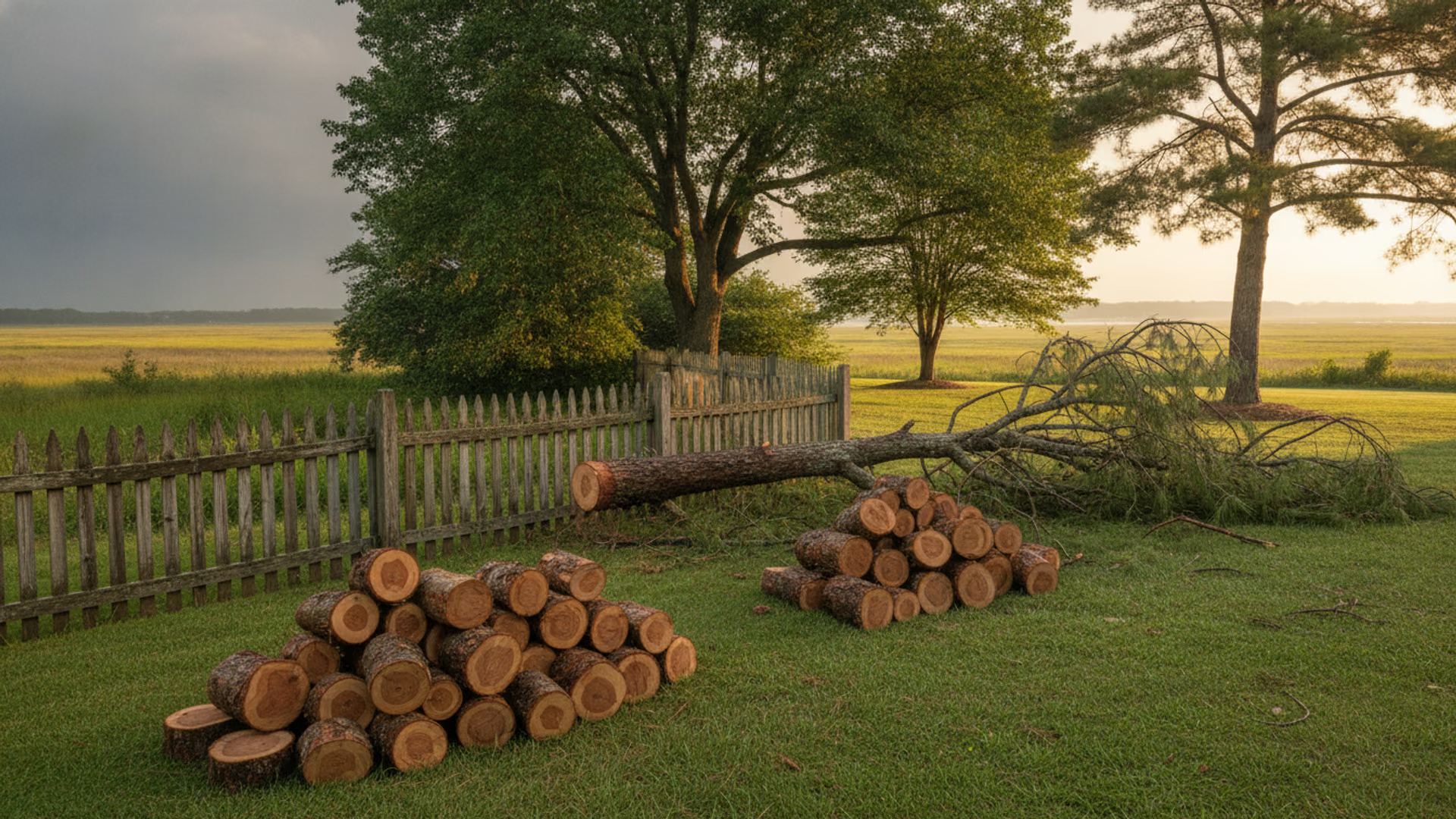
A loblolly pine is lying across your roof. An oak is down across the driveway with the car on the wrong side of it. A limb the size of a utility pole is hanging in the service drop, and the lean on the tree by the porch is worse than it was yesterday. If that is your situation, you need emergency tree removal in Yorktown, VA from a company that picks up — and Cut 'Em Down Tree Service answers the phone 24 hours a day 7 days a week. Call (757) 771-8309.
That is 24 hour tree removal in the plain sense: the line is answered at 2 a.m. in a nor'easter the same as on a Tuesday afternoon. We have served Yorktown and the Virginia Peninsula since 2006, we are bonded and insured, and every job is done by our own crews. One honest boundary first: if the tree is standing, sound, and you are planning ahead, that is a job for our scheduled tree removal service. This page is for right now.
Is This a Tree Emergency? A 60-Second Triage
Here is what we treat as an emergency, and what can wait.
Call now if:
- A tree fell on the house, the garage, or a car. Weight on a structure gets worse with every gust and every hour of rain; a cracked rafter this afternoon is a collapsed roof section by morning.
- A tree blocking the driveway or the only road out. On the long lanes off Seaford, Dandy, and Guinea Neck, a trunk across the drive means being cut off.
- A tree or limb touching a power line or your service drop. Utility first — next section.
- A new lean with cracked or mounded soil at the base. That is the root plate moving, and on the Peninsula's shallow, wet-subsoil root plates a tree that has started to go over almost never re-anchors. Keep everyone out from under it.
- Hangers — broken limbs caught in the canopy over a roof, driveway, deck, or play area.
Said plainly: storm-thrown trees are under load. A trunk on a roof or a limb pinned under another is spring-loaded, and the week after a storm is when homeowners with chainsaws get hurt. Do not cut it, do not climb on the roof to look, and do not try to drive the car out from under it.
Can wait for a scheduled visit: the pine that has been dead since spring, the sweetgum you have disliked for years, a lean that is not new. Those are cheaper and calmer as planned removals.
Tree in the Power Lines? Call Dominion First — Then Us
Most tree-company pages skip this step. It is the one that keeps people alive.
- Any wire involved — down, sagging, or with a tree resting on it — call Dominion Energy first, not a tree company. Report it through Dominion's outage map or outage line, treat every line as live, stay well back, and keep children and pets inside. Dominion clears its own lines, and when a tree is tangled in the service drop it can disconnect service so a tree crew can work safely. No reputable crew touches a tree in contact with a line until the utility has cleared or de-energized it, and Virginia law bars homeowners from trimming near energized lines themselves. Anyone who offers to "just cut it off the line" is the crew to send away.
- If the structure is breached, you smell gas, or anyone is hurt — call 911 and get everyone out.
- Then call Cut 'Em Down at (757) 771-8309 — 24 hours a day 7 days a week — and your insurance company.
Dominion says trees and limbs are the No. 1 cause of outages on its system. The August 2026 storms left more than 4,000 York County customers dark, and a single "Tree On Line" event on August 19 accounted for 2,636 of them. Line contact is how storms here usually end.
Tree on the House: Storm Damage Tree Removal Without Making It Worse
The sequence homeowners rarely know: the tree comes off before the roofer can tarp anything, and how it comes off decides whether the damage stays a section of shingles or becomes a second hole.
Storm damage tree removal starts with reading the load. Is the root plate still half in the ground, holding the trunk in tension? Which limbs are pinned, waiting to spring when the weight lifts? Which way does the trunk want to roll at the first cut? Only then does anyone start a saw.
The tree is then rigged and removed in controlled sections, lifted off the structure rather than dragged across it. Where a tree is too big or too boxed-in to lower conventionally — a 3-foot pine trunk across a ranch roof with the only access on the far side — crane-assisted picks take each section straight up and away. Once the roof and access are clear, your roofer or restoration contractor can tarp, and you get a free written estimate for the full storm damage tree removal and debris cleanup.
We are a tree company: the roof repair is the roofer's job, and ours is to get the tree off without adding to the bill. If a tree fell on the house and the car both, photograph everything first and leave the car where it is — the tree is lifted, the car is never pulled. Bonded and insured on every emergency call.
Documenting the Damage for Your Insurance Claim
Before anything is moved — if you can do it safely from the ground — take timestamped photos of:
- A wide shot of the whole tree and what it landed on.
- Every impact point: roof, gutters, siding, fence, and the vehicle's plate with the damage.
- The failure point — the uprooted root plate or the split trunk. It shows the tree failed in the storm rather than from long-standing decay, the distinction adjusters care about.
- Any downed lines, from a safe distance.
Keep the cut sections on site until the adjuster has seen them or released you.
In general terms, a homeowner policy typically covers removing a tree that fell on a covered structure — house, garage, fence — plus the repairs, often with a capped debris-removal amount. A tree that fell in the yard and hit nothing is usually not covered, and a neighbor's tree on your house is typically your policy's claim. Every policy differs, so check yours and read our guide to what homeowner's insurance covers after a tree comes down.
What we provide is a free written estimate you can hand to your adjuster. Hurricane tree damage cleanup goes smoother when the paperwork starts before the first cut.
Storms Here Have a Calendar — and Ignore It
Hurricane season runs June 1 to November 30 and peaks August through October. The Peninsula's defining tree event is still Hurricane Isabel, September 18, 2003: the ground was already rain-soaked, and loblolly pines and mature oaks tipped out whole, root plate and all. Gloucester Point recorded a 91 mph gust, Sewells Point a 7.9-foot storm tide, over 90% of Hampton Roads lost power, the Buckroe pier washed away, and poquoson.com's Isabel log recorded multiple large trees on houses — including a 3- to 4-foot-diameter tree that crushed a vehicle at Poquoson Baptist Church.
Irene, August 27, 2011, killed four Virginians with falling trees, including an 11-year-old in Newport News. Nor'Ida, November 2009, stalled for three days and pushed a 6.86-foot tide at the Yorktown gauge — days of soaked root zones loosen root plates as surely as wind. The January 30 to February 2, 2026 nor'easter loaded limbs over lines and roofs with 4-plus inches of snow, sleet, and freezing rain, and the June and August 2026 thunderstorms dropped large trees across Hampton and York County — after which Hampton officials publicly urged residents to remove rotted or hollow trees before hurricane season.
Why the Peninsula fails this way: Slagle and Emporia soils around Yorktown, and Nimmo and Tomotley soils in Poquoson and Tabb, perch a seasonal water table inches below grade, so tall pines root shallow. Add 40- to 60-year-old subdivision pines at full hazard height over 1970s and 80s roofs, and hurricane tree damage cleanup becomes a matter of when, not if. Nor'easters and pop-up downbursts do not check the hurricane calendar, which is why the phone is answered year-round, 24 hours a day 7 days a week. The best emergency is the one you scheduled in May — see how to prepare your trees for hurricane season.
Where We Respond
Yorktown is home, and Cut 'Em Down responds across York County and the Virginia Peninsula. In Hampton, that means 50- and 60-year-old pines over Fox Hill, Grandview, and Willow Oaks lots near sea level. In Poquoson, a city roughly 90% inside the floodplain, it means the 40- to 50-year-old loblollies planted with the subdivisions — the age class Isabel put through roofs. Across the Coleman Bridge in Gloucester Point, York Shores and Sarah Creek lots take the full York River wind. In Norfolk, reached via the HRBT, it means century-old oaks over Ghent and Colonial Place slate roofs — where a city-owned verge tree needs a city permit even after a storm, and we tell you which is which. We also answer storm calls in Newport News, Seaford, Grafton, Tabb and Bethel Manor, and across the river in Bena.
After the Storm: Cleanup and the Trees That Stayed Up
Once the hazard is down, the rest is cleanup: limbs chipped, logs bucked and hauled, driveway and yard cleared — with a light footprint on saturated Coastal Plain lots, because the tree should be gone, not the lawn with it. After a regional storm, hurricane tree damage cleanup may run as a return visit, and we say so up front.
Then the survivors. A cracked scaffold limb, a partial uproot, or a pine with a broken top that Ips beetles will find by July deserves a professional look before the next front — that is what our tree health assessments are for. A storm-damaged tree that stayed up but now has to come down becomes a scheduled storm damage tree removal, and the stump it leaves is a job for stump grinding.
Tree Down Right Now?
Call (757) 771-8309. Emergency tree removal in Yorktown and across the Peninsula, answered 24 hours a day 7 days a week, bonded and insured, since 2006, with a free written estimate on the full cleanup. If the tree is not on the house yet but you want it looked at before the next storm, Get Free Estimate.