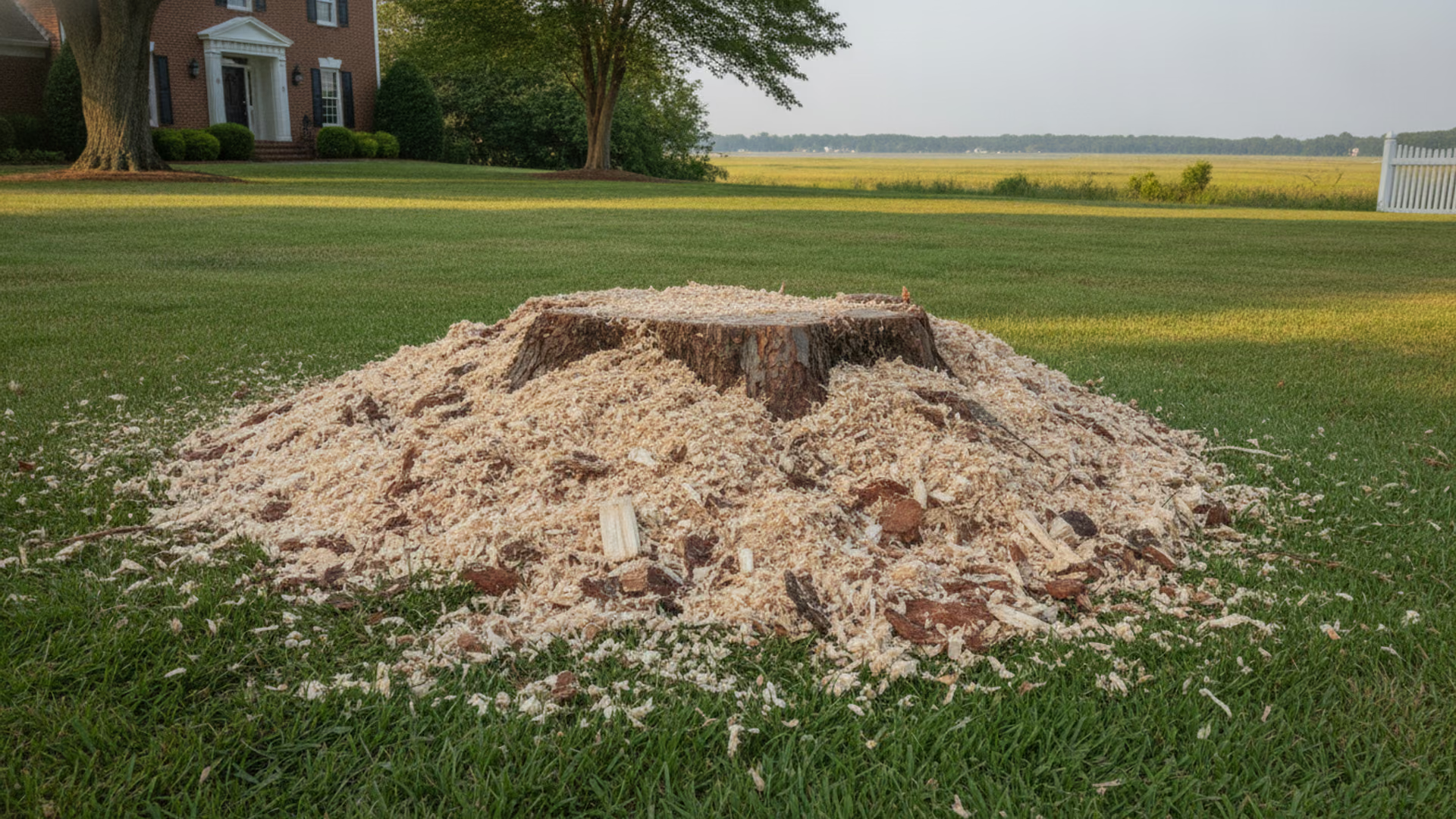
The tree is gone, but the stump is still there. You steer the mower around it every Saturday, the weeds have claimed it as an island, and last month it caught somebody's foot on the way to the shed. Or worse — it is alive again, pushing up a thicket of shoots every time you turn your back. Cut 'Em Down Tree Service handles stump grinding in Yorktown, VA and across the Virginia Peninsula: the stumps left by our own removals, the ones another crew flush-cut and walked away from, storm-snapped trunks cut off at the knee, and the old stump that came with the house. We have been at it since 2006, we are bonded and insured, every job is done by our own crews, and every estimate is free.
Why That Stump Won't Just Go Away
A stump is not a neutral object in the yard. It keeps costing you something every season it sits there.
It's a trip hazard and a mower-eater. If you're tripping over the old stump on the way to the shed, that is the obvious version. The sneakier version is the stump that was cut flush and has since disappeared into the grass — you find it when the mower blade does, and a bent blade or a cracked deck costs more than the grind would have. Either way you end up string-trimming a ring of weeds around it every week for years.
The shoots keep growing back. If a stump is sprouting, the root system under it is still alive and the crown of the stump is still above the growth point. On the Peninsula the worst offenders are sweetgum, crape myrtle, Bradford pear and red maple — the builder-planted trees of the 1980s and 90s subdivisions, now failing on schedule. Cutting the shoots feeds the cycle; every cut tells the roots to push harder. Grinding the crown below grade removes the tissue the shoots come from.
Termites and carpenter ants. A rotting stump does not cause termites, but in a humid Coastal Plain yard it is food and shelter for eastern subterranean termites and carpenter ants. A stump within reach of a slab or crawlspace is one you don't leave.
A fresh pine stump is not a mulch pile. Black turpentine beetles and Ips engraver beetles — the same insects that finished off the drought-stressed loblolly you just had removed — breed in fresh pine stumps and root collars, then move to the next pine over. Grinding the stump takes the brood site out of the yard.
Stump Grinding vs. Stump Removal: Which One Do You Need?
Most people searching for stump removal in Yorktown, VA actually need grinding, and the difference matters for both your wallet and your lawn.
Grinding uses a carbide-toothed cutter wheel to chew the stump into chips. The standard grind takes the stump 6 to 12 inches below grade — deeper and wider, with a "root chase" along the major surface roots, where you plan to sod, replant, set a fence post or pour a slab. The hole is backfilled with the grindings or with topsoil, and the roots left in the ground die and decay in place over several years. The only disturbed ground is the stump's own footprint.
Full removal means excavating the entire root ball with a machine. It costs several times what a grind does, leaves a crater the size of a hot tub, and puts ruts across the lawn on the way in and out. It earns its price in exactly one situation: a foundation, driveway or pool is going exactly where the tree stood and the ground has to be completely clear.
For nine out of ten Peninsula yards, grinding is the right call. And it does not matter whether we took the tree down or someone else did — whether it came down on a scheduled removal or in the middle of the night after a storm, a stump is a stump.
What's Left Behind on the Peninsula: Isabel Stumps, Beetle Pines and Builder Trees
Every region has its own inventory of stumps. Ours was written by three things.
Storms. Hurricane Isabel came ashore on September 18, 2003 and toppled or snapped thousands of loblolly pines standing in saturated ground across York County; Irene in August 2011 and the August 2026 thunderstorms added more. In the rush to clear roofs and driveways, snapped trunks were cut off at the knee and tipped root balls were flush-cut and left. More than twenty years on, those stumps are still in yards from Edgehill to Dandy.
Beetle-killed pines. Back-to-back dry summers in 2023 and 2024 set up Ips and black turpentine beetle kills in the 30-to-50-year-old screen pines lining subdivision lots. The dead pines came down; the stumps stayed. With emerald ash borer confirmed in York County in 2024, ash stumps are the next wave.
Builder trees. The sweetgum, red maple and Bradford pear planted at build-out in Running Man, Tabb Lakes, Coventry and Kiln Creek on the Yorktown side, and in Grafton Woods, Wythe Creek Farms and Lakes at Dare down in Grafton, are reaching end of life on schedule — and sprouting from their stumps on schedule.
Species matter once the wheel is turning. A loblolly pine stump softens within a few years in this humidity but stays resinous at the heart, and while it rots it feeds termites, carpenter ants and beetle broods. Oak stumps — white, willow, southern red — stay hard for a decade or more: slower to grind, more machine time, but rarely a sprouter. Live oak on Poquoson lots is the exception; it resprouts from stump and roots alike. Sweetgum and crape myrtle will sprout from any stump left above grade.
How a Stump Gets Ground — and What We Look For First
The grinding is the quick part. What protects your property happens before the machine shows up.
The estimate. Every stump gets measured at ground level, flare included, because diameter at grade drives both the time and the price. We note species, count and access — gate width, slope, distance from the street — and then what is near it: septic tank or drainfield, irrigation lines, invisible dog fence, landscape lighting, a well line, the Dominion service drop overhead.
Virginia 811. Grinding below grade is ground disturbance, so a Virginia 811 locate (call 811 or va811.com) gets the public utility lines marked first; allow a few working days. The part most homeowners don't know: 811 marks utility-owned lines only. Private lines past the meter — septic, irrigation, dog fence, low-voltage lighting, the run to a detached garage — are not marked, which is why the estimate walks them with you. Older lots off Route 17, along Wolf Trap Road, in Dandy and Seaford, across Poquoson and on the Gloucester side are the ones most likely on septic, and a stump over a drainfield is a grind-shallow-or-leave-it decision, not a default grind.
The grind. The cutter wheel works across the stump in passes to 6 to 12 inches below grade, then chases the surface roots wherever sod or a new planting is going in.
The stump grindings. Grinding produces far more volume than the solid stump held. The chip-and-soil mix can be raked back into the hole and mounded — it settles over a season as the chips decay, and since fresh grindings tie up nitrogen while they break down, grass wants a topsoil cap before seed. Or the grindings get raked out and hauled, with topsoil brought in so you can seed immediately.
Wet ground. Yorktown and Grafton sit on Emporia and Slagle soils with a seasonal high water table; Poquoson's Nimmo and Tomotley soils hold water inches below grade. After a wet spell a grinder ruts a lawn. Grinders range from walk-behind units that fit a standard backyard gate to tracked machines; the lightest one that reaches the stump, ground protection on soft turf, and scheduling around the soak are how a yard stays a yard.
What Stump Grinding Costs
Stump grinding cost comes down to a handful of factors, and diameter at grade is the biggest — many services price per inch of diameter, so a 30-inch oak flare costs more than a 12-inch crape myrtle. After that: species hardness (an oak stump takes more wheel time than a pine of the same size), count (the second and third stump on the same visit cost less each, because the trip is already paid for), access and terrain, depth and whether roots get chased, and whether the grindings are hauled off and topsoil brought in.
For a sense of scale, nationally a single residential stump usually lands in the low-to-mid hundreds of dollars, and per-inch pricing of a few dollars per inch with a trip minimum is common. Those are market figures, not our prices — a real number requires seeing the stump.
Two more things worth knowing. First, the cheapest stump grind is the one done in the same visit as the removal: one mobilization, one cleanup. When you get a removal estimate, ask for the stump in the same number. Second, people search for "free stump grinding," and the honest answer is that nobody grinds for free — bundling the stump with the removal is the closest thing to it. The full removal-plus-stump picture is in our Hampton Roads tree removal cost guide.
Where We Grind Stumps
Yorktown is home, and the Virginia Peninsula is the territory. In Yorktown and York County that means Historic Yorktown lots, Edgehill and Marlbank Cove; in Grafton it is the 1980s and 90s pine subdivisions — Grafton Woods, Wythe Creek Farms, Lakes at Dare. Poquoson brings its own conditions: salt- and wind-killed loblollies, wet Nimmo and Tomotley ground, and tight side-yard access around homes elevated after Isabel. We also grind stumps in Tabb — Acree Acres included — Seaford, Hampton and Newport News, and across the Coleman Bridge in Gloucester Point.
Stump grinding in Yorktown, VA is usually the last step of a job that has been half-finished for years. Cut 'Em Down Tree Service has been doing that work since 2006 — 20 years in business, 1000 projects completed, 100% of jobs done by our own crews, bonded and insured. Point at the stump, tell us what is buried near it, and get your free estimate.