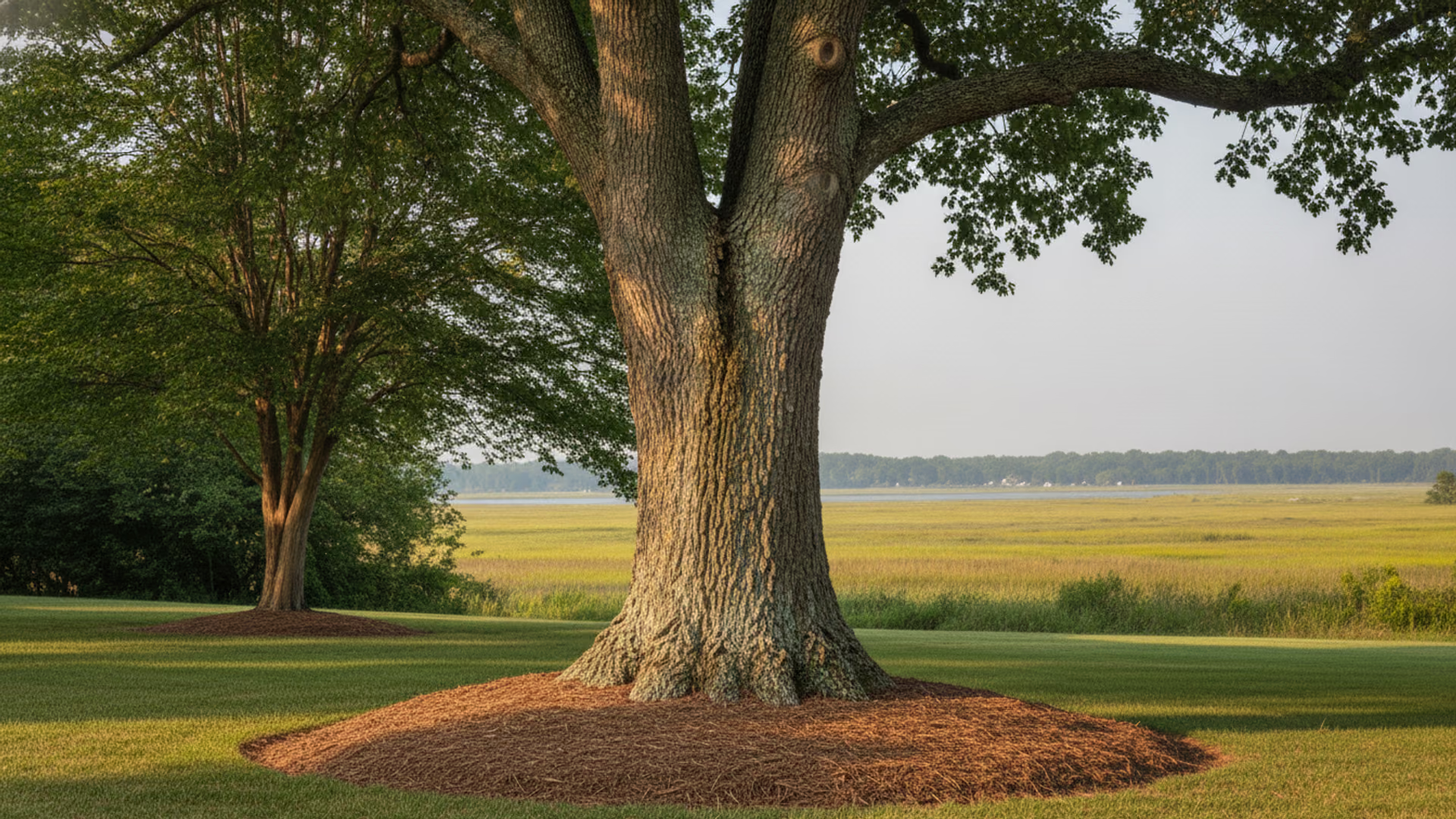
A tree health assessment in Yorktown, VA tells you whether a declining tree can be saved before anyone quotes a removal. The ash by the driveway leafed out thin this spring and the top looks see-through. The loblolly behind the fence is going rust-orange from the tip down. The willow oak over the roof browned at the leaf edges in August, a little worse than last year. Or a pine leans a few degrees more than it did before the last storm. If you're standing at the kitchen window typing "is my tree dying" into your phone, the right first step isn't a removal quote — it's an experienced set of eyes and a straight answer. That's what a tree health assessment in Yorktown from Cut 'Em Down Tree Service is for. We've been cutting, pruning, and just as often not cutting Peninsula trees since 2006. We're bonded and insured, estimates are free, we're available 24 hours a day 7 days a week, and you can reach us at (757) 771-8309.
Signs a Tree Is in Trouble
Trees rarely quit overnight. The signs a tree is dying show up months ahead, and homeowners describe them the same way every time:
- No leaves this spring, or a thin, one-sided crown. A tree that skipped leaf-out, or leafed out on only some limbs, is showing you where the damage is. On ash, thinning from the top down is the first emerald ash borer sign most people notice.
- Bark falling off. Sheets of bark sloughing usually mean the wood underneath is already dead. On ash, look for pale "blonding" where woodpeckers have stripped the bark chasing larvae, and the D-shaped exit holes underneath.
- Mushrooms at the base of the tree. Conks, shelf fungus, or mushrooms at the root flare fruit from wood that has already decayed. Mushrooms at the base mean root rot or advanced decay — and base decay is what puts whole trees on the ground without warning.
- Pitch tubes and a fading crown on a pine. Popcorn-sized resin blobs on the bark and a crown going yellow-green, then orange, then brown mean bark beetles are already inside. Our guide to how to tell if a pine tree is dying walks through it stage by stage.
- Deadwood, dieback, woodpecker work, and lean. Dead limbs in the upper crown, fresh woodpecker damage, a lean that wasn't there last year, or cracked and mounded soil at the base after a windstorm.
One of these is worth a look. Two or more, keep cars and kids out from under it and call.
What an Honest On-Site Assessment Covers
There's nothing proprietary about a good assessment — it's a thorough visit done in order:
- A walk-through with you. History first: when it started and what changed — a storm, trenching near the roots, grading, a dry summer, a flooded yard.
- Crown, trunk, and root flare. Dieback pattern, deadwood, and epicormic sprouts in the crown. Cracks, cankers, cavities, exit holes, pitch tubes, bark loss, and included bark on the trunk. Fungus, girdling roots, a buried flare, soil heave, and lifted roots behind a lean at the root plate.
- Findings. What we saw, how far along it is, and what's under or beside the tree.
- A clear recommendation. Keep and monitor, prune, cable and brace, remove — or "get a lab test first."
When the worry is a specific target — the roof, the driveway, the Dominion service drop, the neighbor's fence, a play set — the same visit is a tree risk assessment: how likely is this tree to fail, and what does it hit when it does. Some questions can't be answered from the ground. Bacterial leaf scorch looks like drought and several other things, and the only way to confirm it is a lab test through the Virginia Cooperative Extension plant disease clinic. We'll tell you when that's the right next step rather than charge you for a guess. For most Yorktown homeowners the assessment happens as part of a free estimate. If the tree is already down or a limb is hanging over the roof, that isn't an assessment — that's emergency and storm damage work.
What's Killing Trees on the Peninsula Right Now
This is what we see in yards from Grafton to Newport News, roughly in order of how often it comes up.
Emerald ash borer. EAB was confirmed in York County in 2024; Newport News has had it since 2020. Field signs: canopy thinning from the top, D-shaped exit holes about an eighth of an inch across, S-shaped galleries under loose bark, woodpecker blonding, and sprouts from the trunk base. The decision is treat or remove. A still-healthy ash with less than roughly a third of its canopy gone can be protected with a systemic insecticide — emerald ash borer treatment is work for a licensed pesticide applicator, not for us, and it repeats for the life of the tree. An ash past that point is a tree removal, and dead ash goes brittle fast, so taking it down early is safer and cheaper than waiting.
Bark beetles in drought-stressed loblolly. Loblolly is the Peninsula's most common yard tree, and after the dry summers of 2023 and 2024, Ips engraver and black turpentine beetles are the pines' active killers here — VDOF logged Ips at 10 spots and BTB at 3 statewide in 2024. Signs: pitch tubes on the trunk, boring dust in bark crevices, a crown fading from the top. People search for southern pine beetle signs, but VDOF currently rates southern pine beetle risk low: this is a beetle-after-drought problem, not an outbreak, and removing one dying pine early keeps the beetles out of its neighbors.
Bacterial leaf scorch on willow and red oaks. Late-summer browning from the leaf margin inward, often with a yellow band between dead and green tissue, coming back a little worse each year. It's incurable. The honest plan: confirm it through the VCE lab, prune deadwood to buy safe years, and plan a staged removal before the tree becomes a hazard over the house.
Salt and flood stress on waterfront trees. Low tidal lots — Dandy on the Poquoson River, Seaford, Poquoson, the York River bluffs — see pines and oaks decline after surge or repeated saltwater flooding. Symptoms lag the flood by a season or two and look like drought.
Root-plate movement and new lean. Slagle and Emporia soils perch a seasonal water table, so tall pines here grow shallow, plate-like roots. A lean that's new since the last nor'easter or August downburst, with cracked or mounded soil at the base, has already started to fail. That's the one we look at first.
Spotted lanternfly — watch list, not problem list. Virginia repealed its quarantine in March 2025 and the insect is in more than half the state, but it is not yet established on the Peninsula. If you find gray, putty-like egg masses on red maple or black walnut bark, photograph and report them.
Keep It, Prune It, Cable It, or Cut It Down
Every assessment ends at one of four forks:
- Keep and monitor. Plenty of stressed trees just need water through a dry spell, mulch pulled off the trunk, and a re-check next season. An assessment that ends in "leave it alone" is still a good assessment, and we'll say so.
- Prune. Deadwood, storm-broken limbs, a correctable structure problem, or leaf-scorch dieback — proper tree trimming and pruning removes the hazard and keeps the tree.
- Cable and brace. A sound tree with a weak union or a heavy limb over a roof can sometimes be supported instead of removed. Cabling and bracing reduces risk without erasing it, and it isn't right for a tree that's already decayed — we'll say which case yours is.
- Remove. Advanced decay at the base (those mushrooms), a mostly dead crown, an ash past the treatment window, a bark-beetle pine, or a new lean with root-plate movement — some trees are past saving. When that's the honest call, we quote the removal on the spot.
We make our living on the work, and we'd still rather tell you a tree can stay than sell you a removal it doesn't need.
What We Are — and What We're Not
Cut 'Em Down Tree Service is a bonded and insured tree crew with 20 years in business on the Peninsula. What you get from us is an experienced on-site evaluation — what we saw, what it means, and what we'd do. What you don't get is a credential we don't hold. If your situation calls for a certified arborist's report — some HOA architectural review boards ask for one, so do Chesapeake Bay Resource Protection Area removal applications in York County and Newport News, and so do some insurance or legal disputes — we'll tell you up front that you need someone with that certification rather than hand you paperwork that won't hold. Same with lab work: leaf-scorch and root-rot confirmation goes to the VCE plant disease clinic, and we'll tell you how to submit a sample.
Serving Yorktown, Newport News, Grafton, and the Peninsula
We serve Yorktown and York County — Edgehill, Marlbank Cove, Running Man, Tabb Lakes, Coventry — along with Grafton, Seaford, Poquoson, Hampton, and Newport News from Kiln Creek down to Hilton Village. We have 1000 projects completed. 100% of our jobs are done by our own crews, not subcontractors. We're bonded and insured, estimates are free, and we're available 24 hours a day 7 days a week. If a tree on your property has you looking up and wondering, get a free estimate or call (757) 771-8309 — you'll get a straight answer either way.